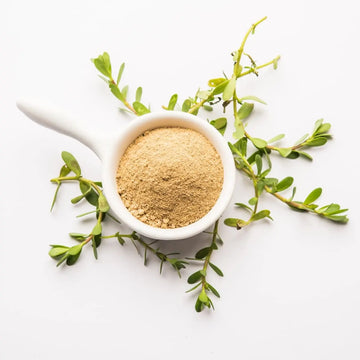



Ashwagandha - action, healing properties and use in natural medicine
|
|
Przeczytasz w 6 min

|
|
Przeczytasz w 6 min
The medicinal properties of ashwagandha are used to treat a variety of ailments, and its use dates back thousands of years, particularly in Ayurvedic medicine.
Ashwagandha, also known as withania somnifera (sluggish greeting) or Indian ginseng is a plant from the nightshade family. Its roots and leaves are used in natural medicine due to the wealth of active substances that have a beneficial effect on the human body.
IN ayurvedic medicine ashwagandha is valued for its adaptogenic properties, meaning it helps the body cope with stress and supports the immune system. In addition, ashwagandha has calming, anti-inflammatory, anti-cancer effects and has a beneficial effect on the hormonal, nervous and cardiovascular systems.
Ashwagandha contains many active substances, among which special attention is paid to: withanolides and withanolides withaferin . These are compounds with strong anti-inflammatory, anti-cancer and adaptogenic effects. Withanolides also affect the nervous system, improving the quality of sleep, reducing stress levels and supporting mental functioning.
The effects of ashwagandha are varied and cover many aspects of the body's functioning. It has a beneficial effect on the immune, nervous, and hormonal systems, as well as on physical performance and male fertility. It is worth noting that the effect of ashwagandha on the body may vary depending on the dose and individual characteristics of the organism.
Adaptogen ashwagandha is a plant that helps the body cope with stress and supports immune system . It acts as adaptogenic plant, which means it helps the body adapt to various stressful situations, both physical and mental. In this way, ashwagandha can help improve the body's overall immunity.
Ashwagandha has a beneficial effect on nervous system , which translates into improving sleep quality and mental functioning . Thanks to its adaptogenic properties, ashwagandha can help reduce stress and anxiety, which in turn affects sleep quality and general mental state.
Studies show that ashwagandha can affect thyroid hormones , which may help regulate thyroid hormone levels. In addition, ashwagandha may affect Cholesterol level and lowering sugar levels in the blood, which may be beneficial for people with metabolic disorders.

The use of ashwagandha may affect physical performance and physical activity . Thanks to its adaptogenic properties, ashwagandha can help the body cope better with physical exertion, which translates into better performance and endurance during training.
Studies show that ashwagandha can affect male fertility , which can be particularly beneficial for people struggling with male infertility . Ashwagandha can improve semen quality, increase sperm count and improve their motility, which can help increase the chances of conception.
Ashwagandha anti-inflammatory properties are one of the key aspects of its action. This plant can help fight inflammations in the body, thanks to its antibacterial and anti-inflammatory properties. Ashwagandha can be used as a natural anti-inflammatory agent, supporting the treatment of various diseases associated with inflammatory processes.
Scientific research suggests that ashwagandha may have potential application in in the treatment of cancer . This plant has anti-cancer effects, affecting cancer cells and inhibiting their growth. Although research on the use of ashwagandha in oncology is still ongoing, the results of preliminary studies are promising and indicate the possibility of using this plant in anti-cancer therapy.
Ashwagandha it also has a beneficial effect on body's immunity , supporting the immune system. Thanks to its adaptogenic properties, ashwagandha can help the body cope better with stress and other factors that lower immunity. In this way, this plant can help improve overall the body's immunity and support the functioning of the immune system.
To sum up, healing properties of ashwagandha are broad and include anti-inflammatory, anti-cancer and immune-boosting effects. This plant can be used as a natural aid in treating various ailments, and its potential applications in natural medicine are still being researched and developed.

In this part of the article we will discuss practical tips for use of ashwagandha , including information on dosage and contraindications. You will learn how to take ashwagandha, how many mg of the extract should be used per day and when it should not be used.
If you are wondering, how to use ashwagandha and is it better to take it morning or evening , the answer depends on individual preferences and goals of use. Ashwagandha can be used both in the morning to support concentration and energy for the whole day, and in the evening to improve sleep quality and relaxation. It is important to take ashwagandha regularly, regardless of the time of day, to achieve optimal results.
When it comes to ashwagandha dosage , recommended dose of ashwagandha may vary depending on individual needs and goals of use. Generally, 300 to 500 mg of ashwagandha extract per day is recommended. For supplements standardized for withanolide content, the dose may range from 50 to 250 mg of extract per day. Always follow the manufacturer's recommendations and any advice from your doctor or supplementation specialist.
Although ashwagandha is considered safe for most people, there are some ashwagandha contraindications to consider. It is not recommended to use ashwagandha in case of:
pregnancy and breastfeeding,
autoimmune diseases such as lupus or multiple sclerosis,
taking antidiabetic, antihypertensive or antiplatelet medications,
allergies to plants of the nightshade family.
In case of doubt as to contraindications to use ashwagandha, it is always a good idea to consult your doctor or supplement specialist.
Ashwagandha may affect the action of some medications, so it is worth paying attention to the potential Drug interactions . Use with caution if you are taking antidiabetic, antihypertensive, antiplatelet, antianxiety, antiepileptic, antidepressant, or thyroid medications. Always consult your doctor before using ashwagandha if you are taking one of these medications.
Choosing the right ashwagandha product can be crucial to achieving the desired results. In this part of the article, we will provide advice on how to choose ashwagandha and what to check before buying to choose a valuable preparation about pharmacy quality .
There are various products available on the market preparations containing ashwagandha , which differ in form, composition and application. It is worth paying attention to:
Composition of the preparation - does it contain ashwagandha extract Whether powdered root,
The concentration of withanolides - active substances found in ashwagandha,
Form of the preparation - capsules, powder or liquid,
Opinions of other users and recommendations from specialists.
An important aspect when choosing an ashwagandha preparation is to decide whether to choose standardized preparations Whether ashwagandha root extract . Standardized preparations contain a specific concentration of withanolides, which allows for precise dosing and control of effects. Ashwagandha root extract, on the other hand, may be less precise but offers a more natural experience of using the plant. The final choice depends on individual preferences and the goals of using ashwagandha.
Sattva offers the following forms of ashwagandha:
powdered root of withania somnifera
Extract standardized for withanolide content in a vegan capsule.
The powdered root can be taken with honey, clarified butter (ghee), or brewed into a tea.
Ashwagandha is often used as an ingredient dietary supplements , which may also contain other health-supporting substances. When choosing an ashwagandha dietary supplement, it is worth paying attention to:
The composition of the supplement - does it contain only ashwagandha or other substances that may affect the effects,
Withanolide concentration - to control dosage and effects,
The form of the supplement - capsules, tablets, powder or liquid,
Opinions of other users and recommendations from specialists.
Choosing a valuable preparation with ashwagandha, it is worth paying attention to its composition, concentration of withanolides, form and opinions of other users. Thanks to this, you can achieve optimal effects of using ashwagandha and enjoy its health benefits.
In this article we discussed ashwagandha , its action , medicinal properties and use in natural medicine . We presented the origin and nomenclature of this plant, as well as its use in Ayurvedic medicine. We discussed the composition of ashwagandha, with particular emphasis on the content of withanolides.
In summary, ashwagandha is a broad-spectrum plant that can bring many health benefits. However, it is worth remembering about the appropriate dosage, contraindications and choosing a valuable preparation to achieve optimal effects of using this plant.
Produkty w tym artykule
Ashwagandha extract - an adaptogen for stress and immunity
38,00 zł
45,00 zł
Podoba Ci się? Dodaj do swojej listy życzeń
Twoje ulubione produkty w jednym miejscu. Kupuj szybko i wygodnie dzięki funkcji listy życzeń!
[title]
[message]


