Collection: Ayurvedic Dosha Oils
Ayurvedic Dosha Oils
×
Adding a scent doesn't make an oil Ayurvedic
Most body oils are a carrier oil with a drop of fragrance. They moisturize, smell nice and disappear. Ayurvedic oils are made differently: herbs and roots are infused into the oil by traditional cooking until their constituents pass into it. In Sanskrit, such an oil is called tailam. The oil stops being a mere backdrop and becomes the carrier of the formula.
This collection includes two types of Ayurvedic oils: classic formulas described in Ayurvedic texts, and dosha oils chosen to suit your constitution and the current condition of your skin.
Classic formulas: Mahanarayan and Kumkumadi
Mahanarayan is a body oil based on sesame oil with 27 herbs and roots, including ashwagandha, bala, shatavari, turmeric and jatamansi. It is thick, warm to the touch and warming. In the classical tradition, it is above all an oil for Vata: for dry skin, for the colder months and for massage after physical exertion. You'll find the full ingredient list on the product page, with nothing left unsaid.
Kumkumadi is a formula described in the Ashtanga Hridaya. It takes its name from saffron, kumkuma in Sanskrit. It is an evening face oil for skin with dark spots that looks sallow and lacks radiance. Just 2–3 drops are enough. The formula is approved by AYUSH and tested in Poland.
Dosha oils: Vata, Pitta, Kapha
Classic formulas are one thing. Daily body oiling is another, and here what matters is how you feel today. The three dosha oils in 200 ml bottles differ in their base, texture and herbs. This is not one oil in three scents.
Vata Oil is thick and warming. It combines sesame, almond and castor oils with ashwagandha, guduchi, ginger and jasmine. For dry, rough skin and for anyone who always feels cold.
Pitta Oil is lighter and has a cooling character. For sensitive, reactive skin that reddens easily. It works well in summer and on days overloaded with stimuli.
Kapha Oil is invigorating and warming. For skin that needs a boost, and for mornings when your body feels heavy and sluggish.
How to choose an Ayurvedic oil
You don't need to know the whole theory of the doshas. Three signals are enough: dryness and cold point to Vata, overheating and irritation to Pitta, heaviness and stagnation to Kapha. If you're looking for one body oil for autumn and winter or for after a workout, choose Mahanarayan. If you're working on your facial skin tone, choose Kumkumadi. You'll find complete product selections in the Vata dosha, Pitta dosha and Kapha dosha collections.
Abhyanga: Ayurvedic body oiling
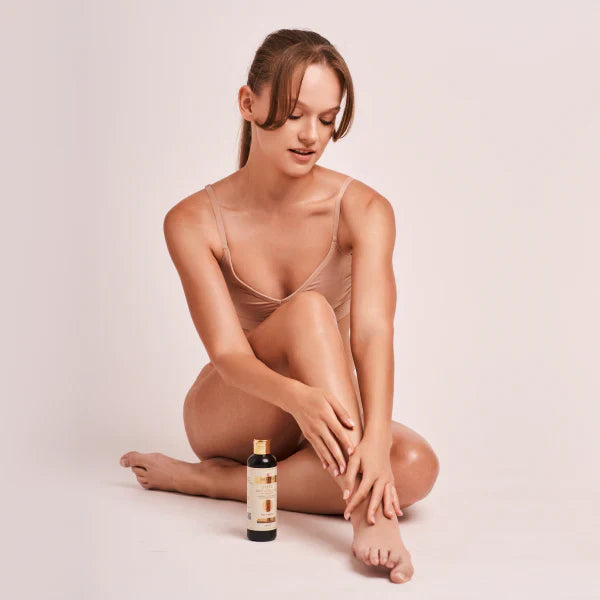
Abhyanga is a full-body self-massage with warm oil, done before your shower, not after it. Warm the oil in your hands or in a water bath. Massage it in with long strokes on your arms and legs and with circular motions on the joints. Leave it on for 15–20 minutes and rinse off with warm water. About a tablespoon of oil is enough for the whole body. After a few days, abhyanga stops being just another care step and becomes a regular part of your day.
Ayurvedic oils: frequently asked questions
Which Ayurvedic oil should I choose for abhyanga?
The one that matches the current condition of your skin: Vata for dryness, Pitta for irritation, Kapha for heaviness. Mahanarayan works well as a warming oil for the colder months.
How is Mahanarayan oil different from Vata Oil?
Mahanarayan is a classic formula: a composition of 27 herbs in sesame oil that has remained unchanged for centuries. Vata Oil is a dosha formula: a blend of sesame, almond and castor oils with herbs, designed for dry, cool skin and made for daily oiling.
Can I use an Ayurvedic oil on my face?
For your face, choose Kumkumadi, as its formula and dosage are tailored to facial skin. Keep body oils for the body. You'll find more face oils in the Face Oils and Massage collection.
Your body doesn't need another fragrance. It needs an oil that will soothe it.

Ayurvedic Vata Massage Oil 200 ml

Ayurvedic Pitta Massage Oil 200 ml

Ayurvedic Kapha Massage Oil 200 ml


Mahanarayan Ayurvedic Body Oil 100 ml
See also:
Diet and supplementation
Ayurvedic Cosmetics
Incense and Aromatherapy
ECOCERT COSMOS certified cosmetics