Collection: Sattva Ayurveda Hair Henna – Natural Plant-Based Hair Color
Sattva Ayurveda Hair Henna – Natural Plant-Based Hair Color
×
Chemical dye colors your hair. Henna colors it and cares for it.
Conventional coloring works in a simple way: ammonia opens the cuticle, peroxide destroys the natural pigment, and synthetic dye takes the place of what was there. Your hair changes color — and pays for it with its structure, elasticity and condition. Sattva Ayurveda hair henna works the other way around. The plant pigment settles on the surface of the cuticle, strengthens it from the outside and leaves your hair thicker, springier and noticeably healthier than before coloring. It's not a compromise between color and care. It's both at once.
Over 20 shades. No PPD, ammonia or synthetic dyes.
The whole palette — from light blondes through caramel and nut browns, reds and mahoganies, all the way to deep black — comes from three plants, blended in varying proportions. Lawsonia inermis (true henna) gives warm reds and copper tones. Indigofera tinctoria (indigo) deepens the color to cool browns and black. Cassia obovata strengthens and adds shine without coloring — for those who care only about the condition of their hair. Every Sattva shade is a certified blend of these ingredients, finely ground, with added Ayurvedic herbs. No PPD. No ammonia. No synthetic dyes. The ECOCERT Cosmos Natural certificate confirms it on paper.
What's in every pack
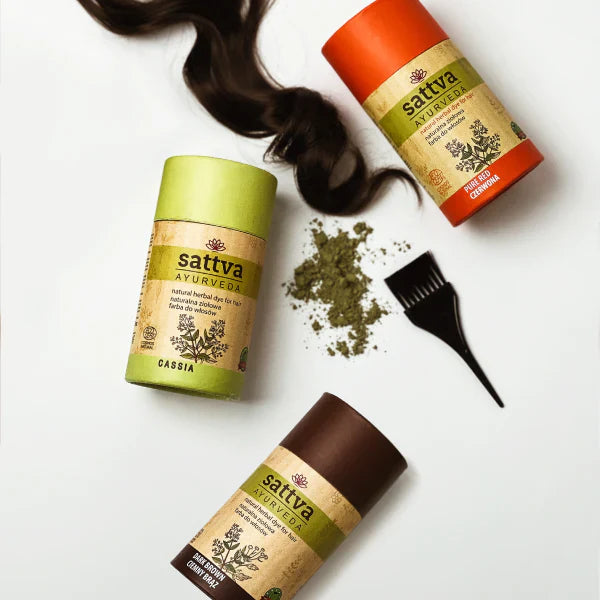
150 g of powder — enough for shoulder-length hair. Two pairs of gloves, two protective caps and a reusable brush. A complete set, ready to use right away, with no extra accessories to buy. If you're trying henna for the first time, there are also starter sets with matched care products that make the whole process easier.
Who it's for
For people who want to cover gray hair without chemicals — henna is long-lasting and covers gray when you choose the right shade and use the two-step method. For those who color regularly and see their hair lose condition with every coloring. For people allergic to PPD — Sattva henna does not contain this ingredient. And for anyone who simply wants to change their color and strengthen their hair along the way, not weaken it.
How plant-based coloring works — 3 questions, 3 answers
Will Sattva henna cover gray hair? Yes. Gray hair has no melanin, so it readily takes up plant pigment — often more intensely than the rest of your hair. If you have a lot of gray, it's worth using the two-step method: first pure henna (a warm base shade), then the target blend with indigo.
Can I apply henna to previously dyed hair? Yes, but with caution. Wait at least 4 weeks after your last chemical coloring and do a strand test — henna may react differently with leftover synthetic pigment. The final result may differ from what you expect, especially on bleached hair.
How long does the color last? Henna doesn't fade in streaks or leave a sharp regrowth line — the color washes out gradually over several weeks, blending in with your natural regrowth. It's one of henna's biggest advantages over synthetic dye.
Color that cares. Not color that damages.
Your hair deserves both.

Natural Henna & Amla Plant-Based Hair Dye 150 g


Sattva Henna for Hair – Red 150 g

Natural Henna for Hair – Red Wine 150 g

Certified Henna for Hair – Burgundy 150 g

Natural Henna for Hair – Light Ginger 150 g

Henna for Hair – Natural Black 150 g

Natural Plant-Based Indigo Hair Dye 150 g

Natural Henna for Hair – Deep Brown 150 g

Natural Henna for Hair – Chocolate Brown 150 g

Henna for Hair – Dark Brown 150 g

Certified Henna for Hair Coloring – Light Brown 150 g

Cassia Herbal Hair Treatment – Neutral Henna 150 g
See also:
Diet and supplementation
Ayurvedic Cosmetics
Incense and Aromatherapy
ECOCERT COSMOS certified cosmetics